- Common Sense Horse Keeping
- Posts
- Equine Nutrition

According to the Horse Feed Global Market Report in 2023, the global horse feed industry grew from $7.58 billion in 2022, to $8.14 billion in 2023. It is expected to grow to more than $11 billion in 2028! Feed companies are employing equine nutritionists who are looking at ways to improve the quality of what we are feeding our horses, so we can get the best results in terms of health and performance. Feed companies are concentrating on developing new and innovative products, including microbiome optimization, supplements, veterinary diets for specific illnesses and diseases, immunomodulatory, nutrition, as well as improving digestibility and palatability.
It is vital that all horsemen understand the basics of equine nutrition. Sadly, having boarded at way too many stables, I know that very few people, including barn managers/owners, have even the most basic understanding of equine nutrition.
I devoted two chapters to nutrition in my book, Common Sense Horse Keeping. I kept it simple and easy to understand, with just the basics that everyone should know and understand, such as calculating hay needs, different kinds of hay, storing grain and hay, reading a hay analysis, understanding feeding rules and the critical nutrients that horses need. However, there is much more to understanding equine nutrition and it is a subject that horsemen should learn about!
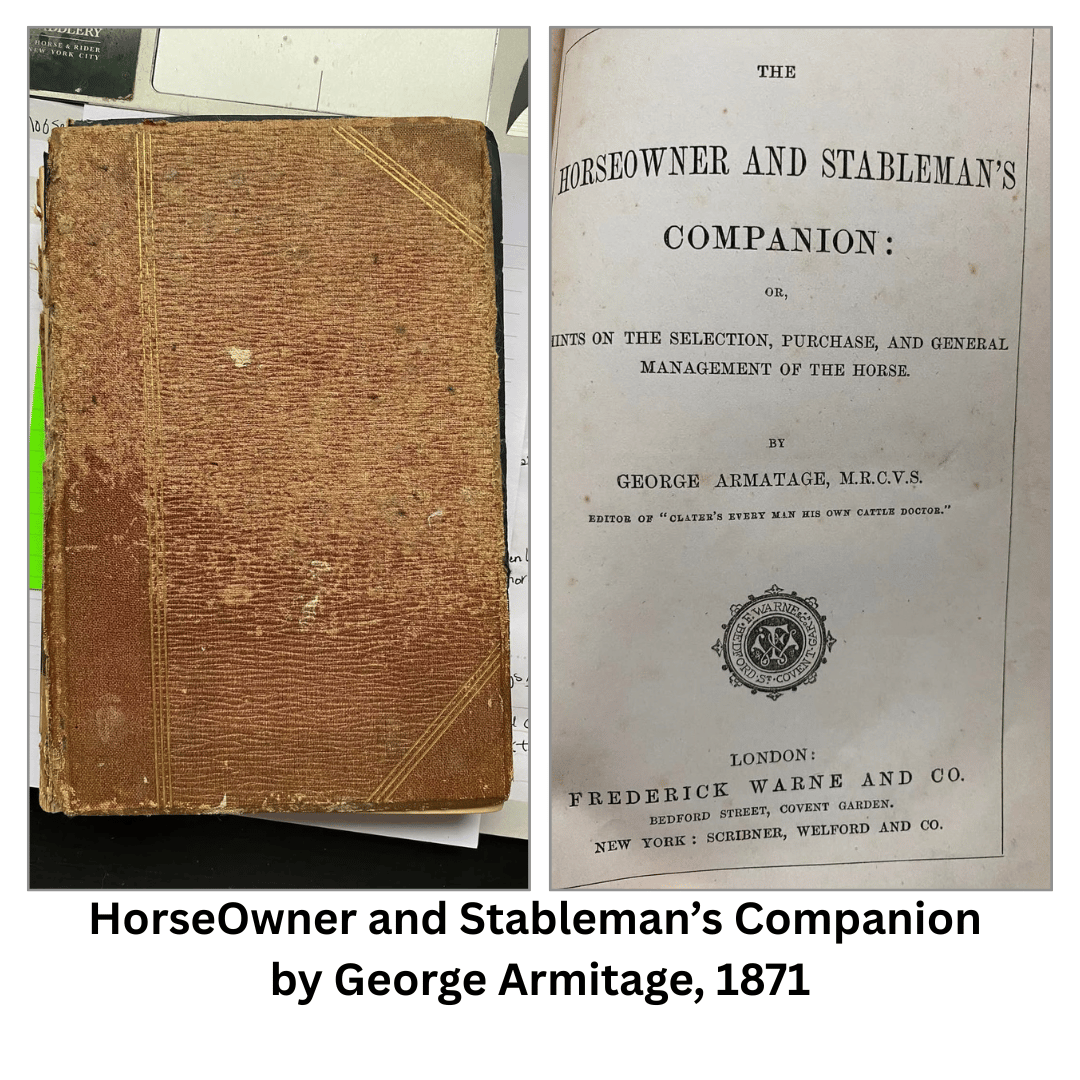
In my home library are at least a dozen equine nutrition books, some of which are 30-40 years old, and while there have been many advances made, especially in the last decade or two, many of the theories of equine nutrition have stayed the same. Even in the book “Horseowners and Stableman’s Companion,” printed in the mid 1800’s, author George Armitage discusses the importance of feeding good quality hay and grain, in order to maintain good health and performance.
With so much research going into equine nutrition, why are we seeing so many cases of metabolic disorders, and ulcers? Cushings used to be an “old horse” disease, yet horses as young as 4 and 5 are being diagnosed with it. I am neither a vet nor a scientist, so I will leave out my theories, but if you own a horse, you should be just as concerned about what is going into your horse as you are about what you are eating, and how you can maximize his health and performance!
I have been giving a lot of thought to my horse’s diet lately. I feed a very good quality grain and hay, with hay being available 24/7 (I cannot wait until I can turn my crew back out on lush pastures! I check them daily to see how high the new grass is growing!) However, having one horse with Cushing’s and who struggles with the heat, as well as a donkey with Cushing’s, I have been giving serious thought to switching to a hay forage diet only, and replacing their grain with a hay pellet, a balance rationer, and vitamin E. As I read more about forage-based nutrition, I am more intrigued about feeding a more natural diet to my horses and donkeys. I have found it difficult to find a good balanced diet for my two with their special needs and I feel that a hay forage diet is what will help them most.
If you feed a hay forage diet, I am curious to hear your thoughts. Please weigh in on my Facebook page, Common Sense Horse Keeping, or shoot me an email!
As we know, horses are herbivores, designed to be constantly grazing. They are hindgut fermenters, meant to consume small amounts of fibrous plants throughout the day. From one website, …”forage forms the foundation, providing structural carbohydrates necessary for optimal microbial fermentation, gastrointestinal motility, and metabolic stability.” Yet many feeds contain fillers, gmo’s, and chemicals and of course, restricting horse’s to stalls for more hours than they are outside grazing, is counteracting what their digestive system is designed to do. For this reason, researching feed and what is going to yield the best results for your horse and yes, even you bank account, is important.
The feed and supplement industry can be very overwhelming. There are so many different products to choose from, not to mention supplements! How do you know which is right for your horse? The wonderful thing about feed and supplement companies is that they all have knowledgeable reps and I have reached out to several to learn about their products. Your vet can also be a valuable resource for deciding on a diet for your horse, especially if your horse has any kind of health issue. I also have an appointment with my holistic vet and will be picking her brain before I make any decisions. Research on the internet is also valuable, as well as asking for reviews from friends.
I am fortunate in that I have never had a horse with ulcers, colic is very rare in my barn (one in 6 years) and other than the Cushing’s, I have not had any other disorders since becoming a barn owner. My horses are able to move about 24/7. Even when stalled at night or during bad weather, they have access to a run, off the back of their stalls. They have access to fresh water and good quality hay at all times. The University of Florida released a study years ago, stating that the key to a healthy horse was mobility, fresh water and unlimited, good quality hay. Unfortunately, many horses do not have access to constant mobility, but there is no reason a horse should not have access to fresh water and good quality hay!
Learning about equine nutrition can be challenging, but it is very interesting and I highly suggest reading up on the subject. There are excellent books on the topic and don’t be afraid to contact feed reps for more information!
In other news…winter has returned for many, including those of us in Florida, for many, it was preceded by a wild weekend of rough weather. Remember, now is a good time to review your disaster plan, and if you don’t have one, create one! Read up on Disaster Planning at Your Check List For Disasters
Don’t Forget to Hug Your Horse!
Lori
